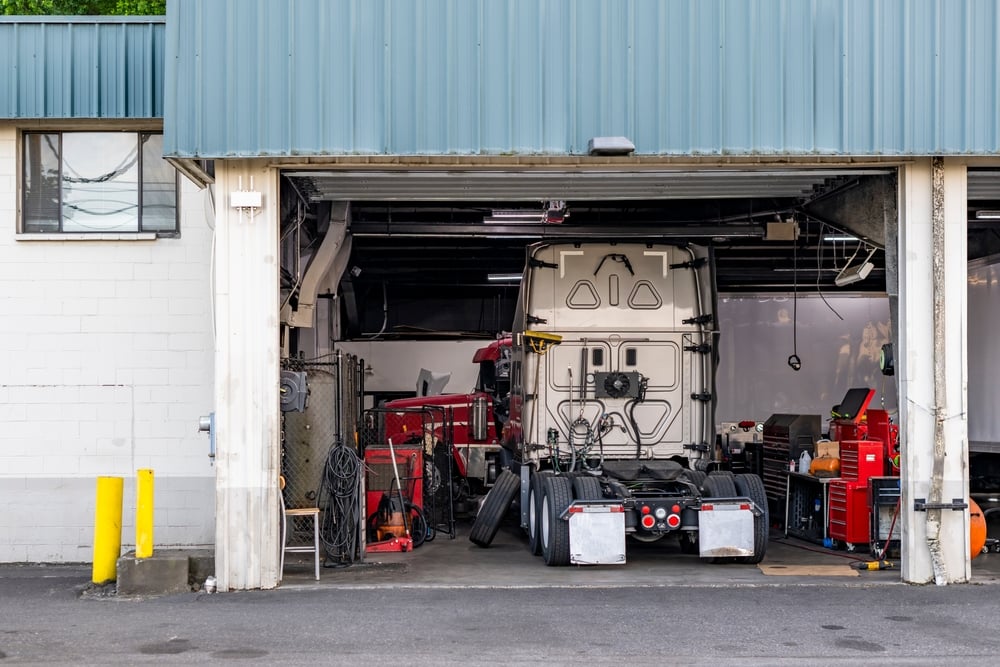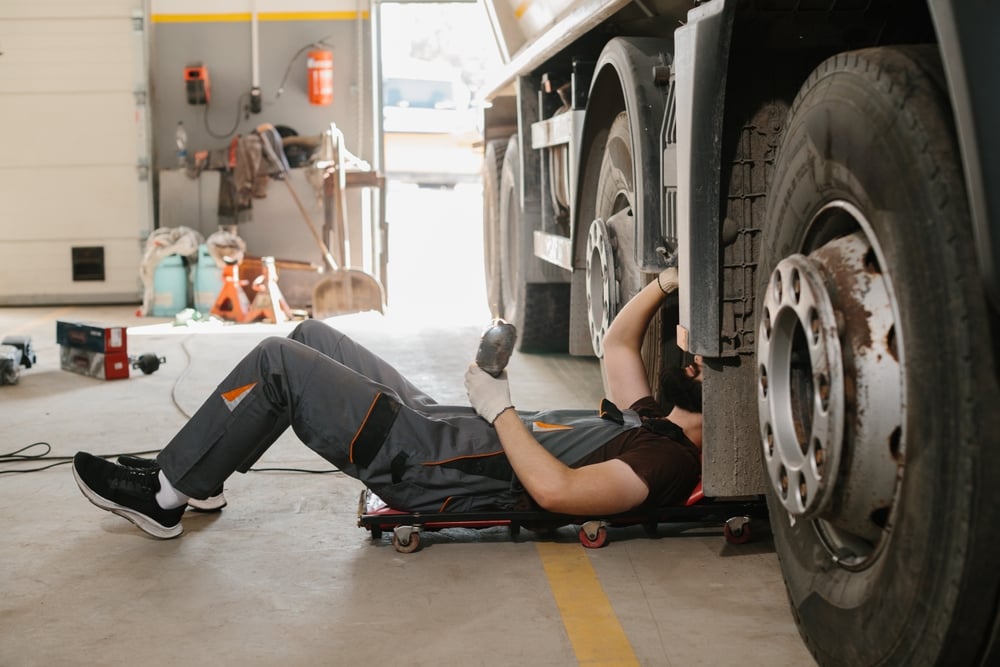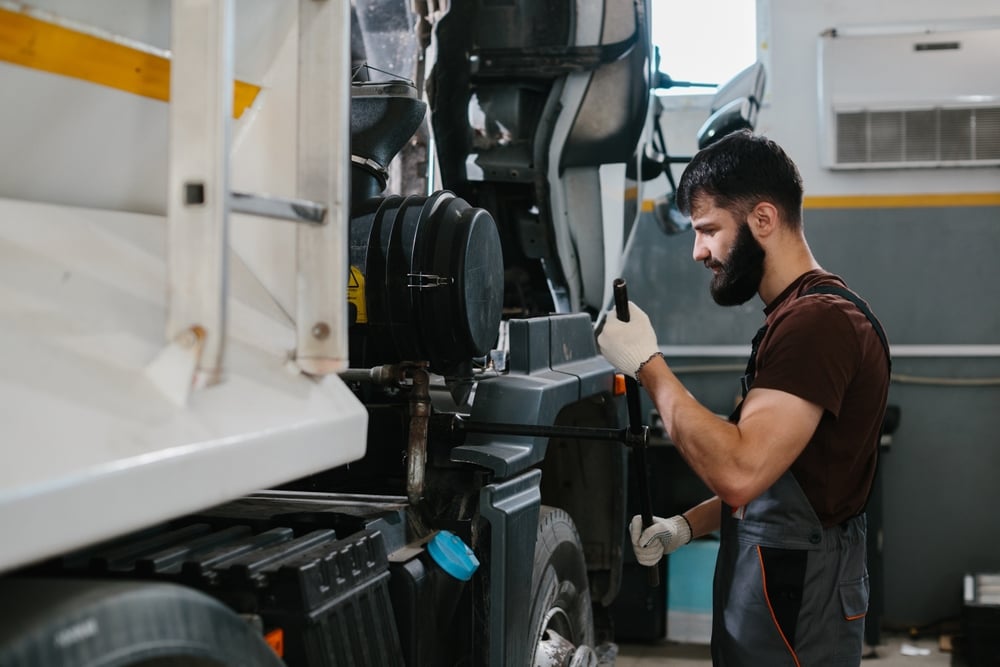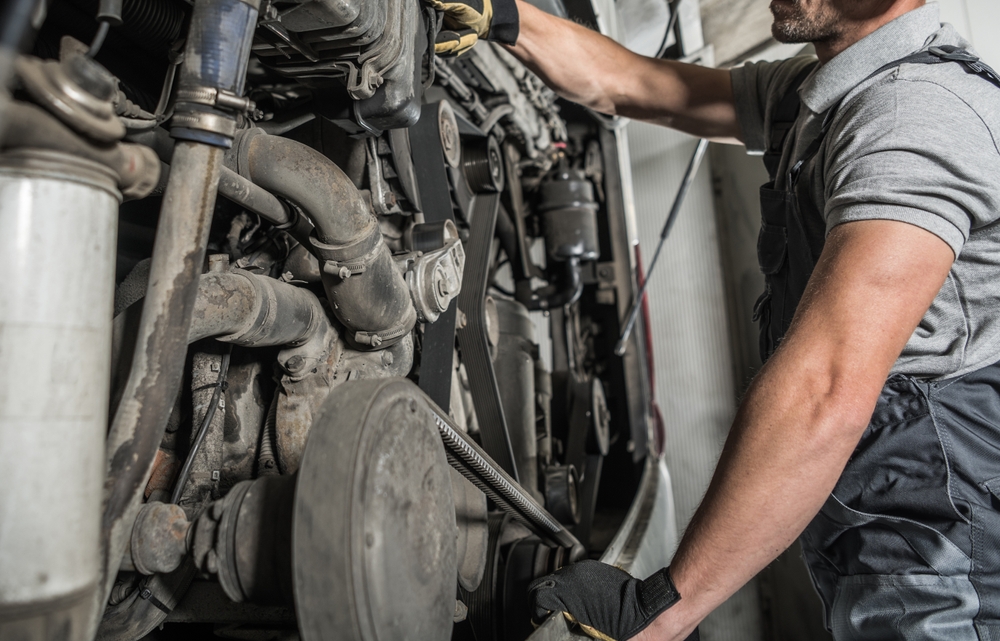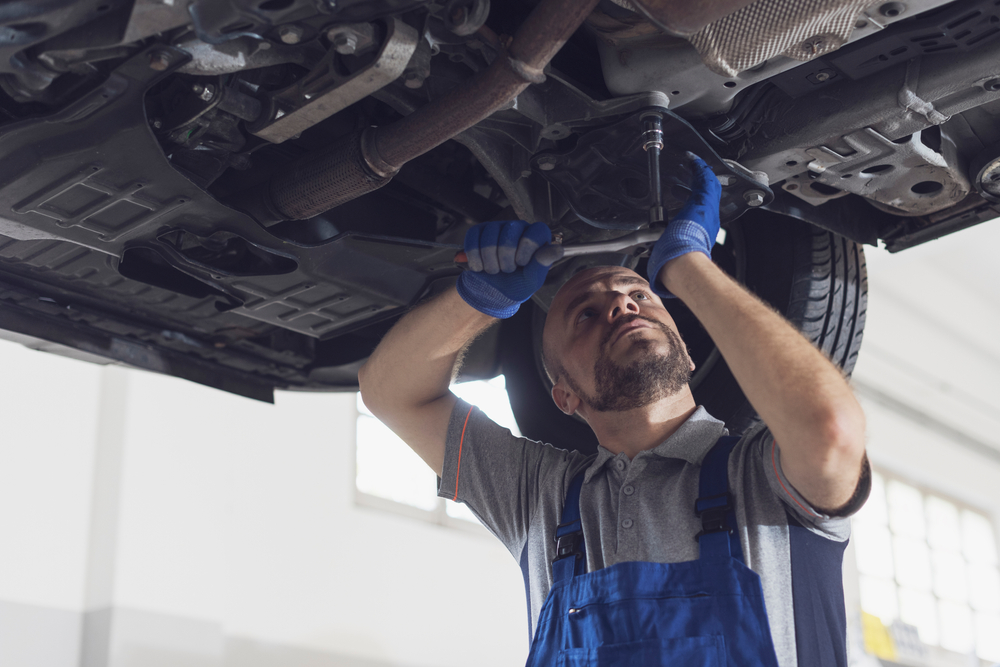
Most brake problems on a heavy-duty truck are not diagnosed by looking at the brake shoes and calling it a day. An air-brake system starts at the compressor and extends through the governor, air dryer, reservoirs, valves, air lines, brake chambers, and finally the foundation brakes at each wheel end. A problem anywhere in that system can change how the truck builds air, releases its brakes, or stops. That is why a good brake diagnosis starts with understanding what the system is doing wrong before replacing parts. At Ares Diesel Repair, we diagnose and repair air-brake problems on commercial trucks, tractors, and trailers throughout the Houston area. Here are some of the problems we commonly look for and what is actually involved in finding them.
Key Takeaways
- Air-brake problems can originate anywhere from the compressor to the wheel end
- Proper diagnosis helps identify the actual cause before replacing parts
- Excessive brake stroke and repeated slack-adjuster issues often indicate underlying problems
- Air leaks, dragging brakes, and slow pressure buildup require systematic inspection
- Preventive brake inspections help fleets reduce downtime and avoid costly violations
Air-Brake Problems Are a Major DOT Issue
Brake defects continue to be one of the biggest problems found during commercial vehicle inspections. During the 2026 CVSA International Roadcheck, inspectors reported 3,379 brake-system out-of-service violations. Another 2,072 violations involved the 20% defective-brakes criterion. Combined, brake-related conditions accounted for 39.1% of all vehicle out-of-service violations recorded during the event.
Those violations can involve much more than worn brake shoes. Inspectors may find excessive chamber stroke, air leaks, damaged hoses, defective chambers, contaminated or damaged friction material, cracked drums, inoperative brakes, and other defects within the braking system. For a fleet, the goal should be to find those problems in the yard or during scheduled maintenance, not during a roadside inspection.
Understanding the Air-Brake System
When we diagnose an air-brake complaint, it helps to break the system into sections.
Air Supply
The air compressor produces the compressed air used by the system. The governor controls when the compressor loads and unloads. The air dryer removes moisture and contaminants before the air reaches the reservoirs. Check valves and other air-management components control where that stored air can flow.
If the truck:
- Builds air slowly
- Will not reach normal system pressure
- Cycles the compressor constantly
- Purges abnormally
- Loses air after shutdown
- Has excessive moisture in the air tanks
The problem may be on the supply side before we ever get to a brake chamber. A leaking brake chamber cannot be diagnosed the same way as a compressor that is not producing enough air, a governor that is not controlling the compressor correctly, or an air dryer that is not functioning properly. The symptom may be “air-brake problem,” but the diagnosis is completely different.
Air Control and Delivery
When the driver applies the service brake, control pressure is sent through the brake system. Relay valves and other control valves allow stored reservoir air to be delivered quickly to the brake chambers.
Depending on the vehicle, the system can include:
- Treadle or foot valve
- Relay valves
- Quick-release valves
- Double-check valves
- Tractor protection valve
- Trailer supply and service circuits
- Spring-brake control valves
- ABS modulators
- Pressure protection valves
A valve can leak externally, leak internally, or fail to deliver or exhaust air correctly. That matters because not every air leak comes from a hose, and not every brake that drags has a mechanical problem at the wheel end. Part of diagnosing air brakes is understanding where the air should be going, when it should be there, and where it should exhaust.
Brake Chambers
The brake chamber converts air pressure into mechanical movement. On an S-cam drum brake, the chamber pushrod moves the automatic slack adjuster, which rotates the camshaft. The S-cam then forces the brake shoes outward against the drum. The amount the pushrod travels during a brake application is called applied stroke. That measurement matters.
CVSA states that the proper way to confirm adjustment on an air drum brake is to measure the applied pushrod stroke and compare it with the regulatory limit for the chamber size and type. The allowable limit is not the same for every chamber. Standard-stroke and long-stroke chambers can have different limits. So when someone says, “The slacks look good,” that does not tell us enough.
We want to know:
- What size chamber is installed?
- Is it standard stroke or long stroke?
- What is the actual applied stroke?
- Are both sides of the axle equipped correctly?
- Is the chamber mounted correctly?
- Is the clevis and pin connection worn?
- Is the chamber or bracket damaged?
- Is the brake returning completely after release?
Federal regulations also require service and spring brake chambers on opposite ends of the same axle to be the same size, and slack adjuster effective lengths must match across the axle. Those details matter because they affect brake balance and mechanical leverage.
An Automatic Slack Adjuster That Keeps Going Out of Adjustment Has a Problem
This is one of the most misunderstood air-brake repairs. Most modern air-braked commercial vehicles use automatic slack adjusters. Their job is to compensate for normal friction wear and maintain the correct running clearance. If an automatic slack adjuster repeatedly ends up with excessive stroke, simply tightening it is not the repair.
CVSA specifically warns that manually readjusting a self-adjusting brake can temporarily shorten the stroke while leaving the actual problem untouched. Bendix gives the same guidance: after correct installation and setup, a properly functioning automatic slack adjuster should not require repeated manual adjustment. When we find excessive stroke, we need to look farther.
That can mean checking:
- Automatic slack adjuster operation
- Clevis pins
- Slack adjuster mounting
- Camshaft movement
- S-cam bushings
- Cam tube condition
- Brake rollers
- Return springs
- Brake shoes and lining
- Brake drum condition
- Brake chamber
- Chamber mounting bracket
- Related foundation brake hardware
A worn S-cam bushing, seized clevis pin, cracked drum, or damaged foundation-brake component can all contribute to excessive stroke. Adjusting the slack does not repair any of those things.
What Causes a Brake to Drag or Run Hot?
A hot wheel end gets our attention quickly because heat tells us work is being done somewhere it should not be.
On an S-cam brake, we may inspect for:
- Brake adjusted too tight
- S-cam not returning correctly
- Seized or dry camshaft components
- Worn cam bushings
- Weak or damaged return springs
- Chamber not releasing
- Damaged brake hardware
- Valve not exhausting properly
- Restricted or damaged air line
- Drum or shoe problems
The important part is determining whether the brake is being held on mechanically or pneumatically. If the foundation brake releases freely when the air circuit is disconnected, that sends the diagnosis in one direction. If air exhausts correctly but the brake still hangs up mechanically, that sends it in another direction. Replacing shoes on a brake that is dragging because of a seized camshaft does not fix the truck. Neither does replacing a chamber when the actual problem is a control valve keeping pressure applied.
Air Leaks Need to Be Traced, Not Guessed At
An air leak can sound like it is coming from one component and actually originate somewhere else. This is especially common around relay valves and spring brake chambers. For example, air exhausting from a relay valve does not automatically mean the relay valve has failed. Internal leakage through another component can sometimes feed air back into a circuit and cause the valve to exhaust. That is why we isolate circuits when necessary, rather than replacing the component closest to the sound.
A proper air-leak diagnosis may involve checking:
- Whether the leak occurs with brakes released
- Whether it appears only during service brake application
- Whether it appears with the parking brakes applied or released
- Which reservoir is losing pressure
- Whether the leak changes when a control or delivery line is isolated
- Whether air is back-feeding through another component
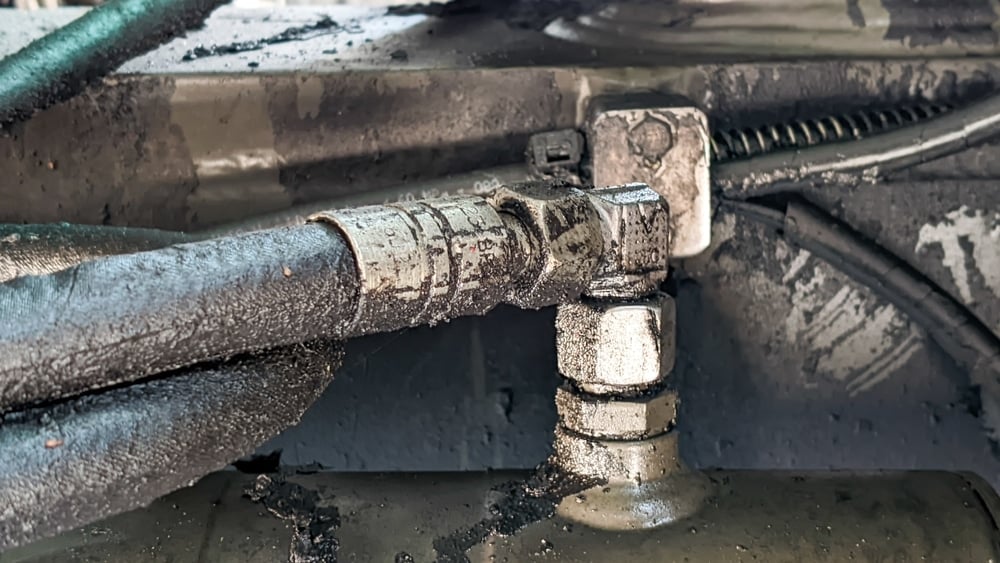
Brake hoses and tubing also have to be correctly routed and protected. Federal rules require them to be secured against chafing, kinking and mechanical damage and require brake-system connections to be free of leaks and restrictions.
On working trucks, we regularly find air lines rubbing against frames, suspension components, brackets and other equipment. A line can look acceptable during a quick walk-around while already wearing through at a hidden contact point.
When the Truck Builds Air Too Slowly
Slow air build is another complaint that should not immediately turn into an air-compressor replacement. We need to determine whether the system is failing to produce air or simply losing the air that is being produced.
Things we may check include:
- Compressor output
- Compressor drive
- Governor operation
- Compressor unloader circuit
- Air dryer operation
- Purge valve
- Check valves
- Reservoir leakage
- Supply lines
- Major downstream leaks
The location of pressure readings matters. If the compressor is producing pressure but it is not reaching the reservoir correctly, that points us in a different direction than a compressor that is not producing volume in the first place. The same applies when diagnosing unusual governor cut-in, cut-out, or dryer purge behavior. Parts should follow the diagnosis, not the other way around.
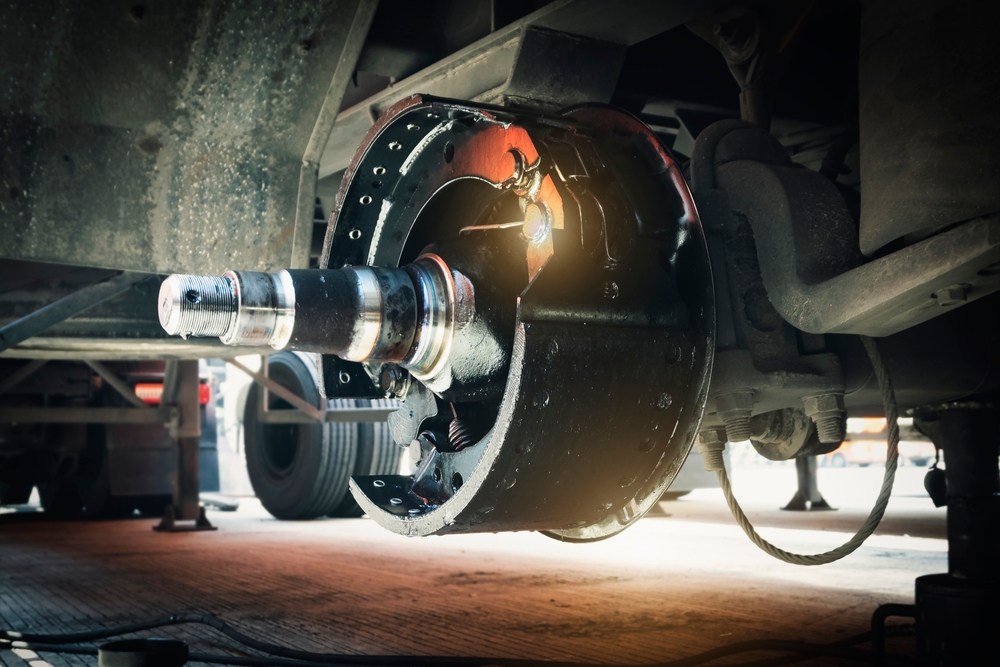
What We Check at an S-Cam Wheel End
When an S-cam brake needs a complete inspection, the lining is only one part of the job.
We may inspect:
- Brake chamber: Condition, mounting, air leakage and applied stroke.
- Automatic slack adjuster: Correct installation, function, mounting and relationship to the chamber and camshaft.
- Clevis and pins: Wear or binding can affect the movement of the assembly.
- Camshaft and bushings: Excessive movement can change brake geometry and contribute to stroke or adjustment problems.
- S-cam: Wear at the cam head can affect how the shoes contact the drum.
- Rollers and anchors: Checked for wear, damage and proper movement.
- Brake shoes and friction: Checked for thickness, cracks, contamination and abnormal wear.
- Return springs and hardware: The brake has to release correctly as well as apply correctly.
- Brake drum: Checked for cracking, heat damage, wear and service limits.
Federal regulations establish minimum brake-lining requirements and require drums and rotors to remain within the manufacturer’s dimensional limits. For example, air-braked non-steering axle drum linings generally cannot be operated below 1/4 inch at the shoe center. At the same time, different requirements apply to steering axles and air disc brakes. That is the legal minimum. A fleet maintenance program should not be built around intentionally running every brake component to the edge of an out-of-service condition.
Air Disc Brakes Need a Different Inspection
More newer trucks are equipped with air disc brakes, especially on steer axles and increasingly on drive and trailer axles. There is no external S-cam and conventional slack adjuster to inspect.
Instead, the wheel end may require checking:
- Brake chamber
- Caliper movement
- Internal adjustment mechanism
- Guide pins and bushings
- Protective boots
- Pads
- Pad movement in the carrier
- Rotor condition and thickness
- Air hose condition
- Mounting hardware
Bendix specifically recommends checking that the pads move freely in the carrier, inspecting guide components and boots and making sure the brake moves freely on its guidance system. A disc brake that does not release correctly can destroy pads and rotors in a short amount of time, so abnormal heat or uneven wear should be investigated rather than treated as normal wear.
Tractor and Trailer Brake Problems Need to Be Looked at as a System
The trailer cannot be ignored when diagnosing combination-vehicle brake complaints.
Trailer brake problems can include:
- Service and emergency gladhand leaks
- Damaged supply or service lines
- Relay or emergency valve problems
- Spring-brake problems
- Brake chamber leaks
- Excessive pushrod stroke
- Automatic slack adjuster problems
- Worn S-cam components
- Brake shoe or drum damage
- ABS faults
- Trailer air reservoir leaks
The tractor protection system and trailer supply circuit also have to function correctly. A driver may report that the trailer brakes are slow to release, drag intermittently, or do not seem to apply correctly. That can require testing both the trailer and what the tractor is supplying to it. Again, the goal is to determine where the problem actually starts.
Brake Stroke Is One of the Most Important Checks on an Air-Braked Truck
CVSA’s inspection guidance is clear on this point. Applied chamber stroke must be measured to know whether an S-cam brake is within its required limit.
A common inspection procedure is to:
- Secure and chock the vehicle.
- Release the spring brakes.
- Establish approximately 90–100 psi in the air system.
- Mark or measure the pushrod in the released position.
- Make and hold a full service-brake application.
- Measure the pushrod movement.
- Compare the measurement with the correct limit for that chamber size and type.
The acceptable stroke depends on the brake chamber. A Type 30 standard-stroke chamber, for example, does not have the same limit as every long-stroke chamber. That is why brake inspections should be based on measurements and component identification—not assumptions.
Preventive Brake Inspections for Commercial Fleets
Federal periodic-inspection requirements establish a minimum inspection standard for commercial motor vehicles, and every vehicle in a combination must be covered. Fleets also remain responsible for keeping required components maintained to those minimum standards between annual inspections. For an active Houston fleet, brake inspection frequency should also make sense for the work the truck performs. A refuse truck, dump truck, construction vehicle, local delivery truck, or heavy vocational unit can operate under very different conditions than a highway tractor. Mileage alone does not tell the whole story.
A useful preventive brake inspection can include:
- Applied chamber stroke
- Air leakage
- Brake lining or pad condition
- Drum or rotor condition
- Slack adjusters
- S-cams and bushings
- Brake chambers
- Air hoses and routing
- Spring-brake operation
- Compressor and air-system operation
- ABS faults
- Trailer brake components when applicable
The point of preventive maintenance is not to create a bigger inspection sheet. It is to catch the $300 problem before it damages $2,000 worth of parts or puts the truck on the side of the road.
Learn more about Ares Diesel Repair fleet maintenance services.
Heavy Duty Brake Repair FAQs
What are common signs of an air-brake problem on a heavy-duty truck?
Common signs include slow air-pressure buildup, air leaks, dragging brakes, excessive brake chamber stroke, and ABS faults. Drivers may also notice brakes that fail to release properly or repeated issues with automatic slack adjusters going out of adjustment. Because these symptoms can originate from different parts of the system, proper diagnosis is important before replacing components.
Why does my truck’s automatic slack adjuster keep going out of adjustment?
An automatic slack adjuster that repeatedly develops excessive stroke may indicate an underlying mechanical problem. Worn clevis pins, damaged S-cam bushings, brake chamber issues, or worn foundation-brake components can all contribute to the problem. Simply readjusting the slack adjuster may temporarily change the stroke without correcting the actual cause.
What causes a heavy-duty truck brake to drag or overheat?
A dragging brake can be caused by either mechanical or pneumatic issues within the braking system. Common causes include seized camshaft components, damaged return springs, a brake chamber that does not release, or a valve that is not exhausting air correctly. Identifying whether the brake is being held mechanically or by trapped air pressure helps determine the appropriate repair.
Why is my commercial truck building air pressure slowly?
Slow air buildup does not always mean the air compressor needs to be replaced. The issue may involve compressor output, governor operation, the air dryer, check valves, reservoir leaks, or major downstream air leaks. Testing the system and checking pressure at different points helps identify whether the truck is failing to produce air or losing the air it produces.
How often should commercial truck air brakes be inspected?
Brake inspection frequency should depend on the vehicle’s workload, operating conditions, and maintenance requirements. Preventive inspections can include checking applied chamber stroke, air leaks, brake linings or pads, drums or rotors, brake chambers, hoses, ABS faults, and other system components. Regular inspections help fleets identify developing issues before they lead to expensive damage, roadside breakdowns, or out-of-service violations.
Heavy-Duty Air Brake Diagnosis in Houston
Proper air brake diagnosis requires identifying the actual source of the problem rather than simply replacing parts. From air leaks and pressure issues to brake adjustment problems and ABS faults, a thorough inspection helps ensure commercial trucks receive the correct repair.
As a heavy-duty truck repair company serving Houston and the surrounding areas, we provide professional air brake diagnosis and repair for trucks, tractors, trailers, and commercial fleets.
Are you experiencing air brake problems or need brake inspections for your fleet? Contact us today to schedule professional heavy-duty truck brake service.